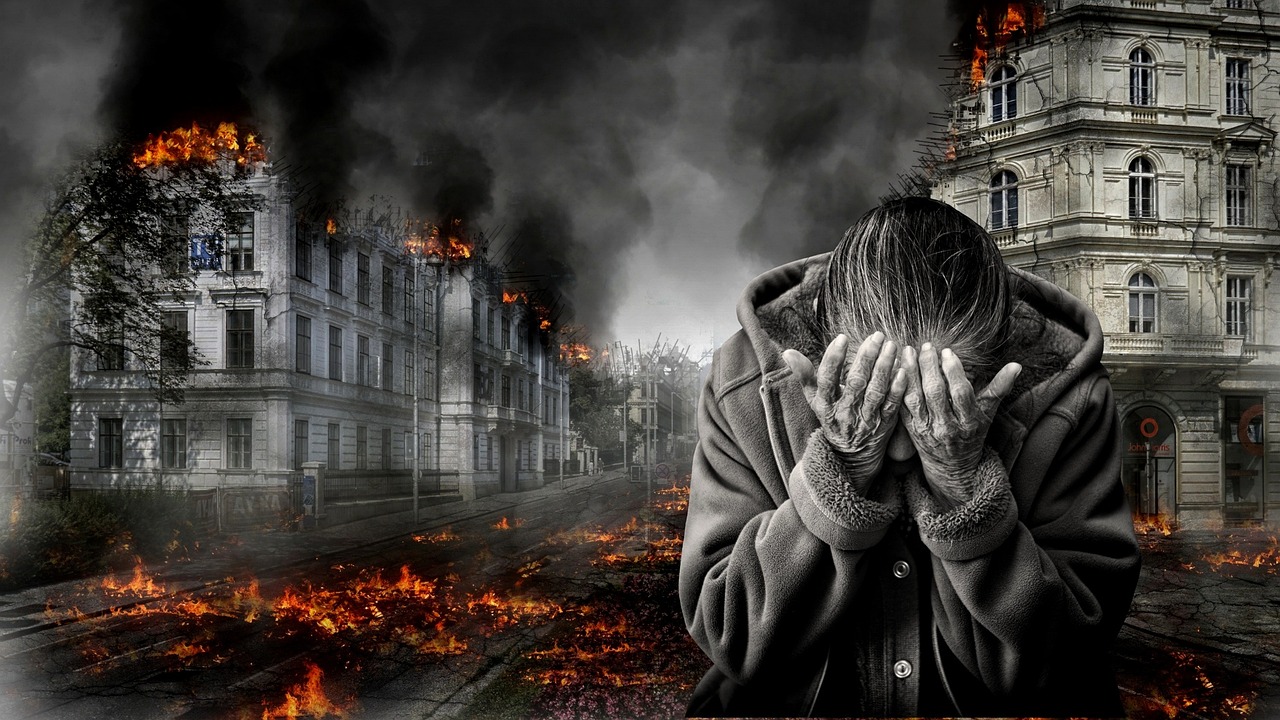

The War on Drugs, Moral Panic

The War on Drugs, Objectives and Motivation
From The War to Counter-Terrorism
Counterterrorism
"Counterterrorism" and the "war on drugs" are two distinct but increasingly intertwined global campaigns, which both target transnational, illicit networks. While counterterrorism focuses on politically or ideologically motivated violence to create fear, the war on drugs focuses on disrupting the illegal trade of narcotics.
Differences and Similarities
Feature Counter-Terrorism War on Drugs
|
Primary Goal |
To prevent, pursue, protect against, and prepare for acts of political or ideological violence. |
To reduce the production, distribution, and consumption of illegal psychoactive drugs. |
|
Motivation of Adversaries |
Political, religious, or ideological beliefs. |
Primarily financial profit, though some groups may have political aims. |
|
Methods of Adversaries |
Acts of violence like bombings, kidnappings, and murders to coerce a third party. |
Trafficking, organized crime, fraud, and money laundering. |
|
Government Approach |
Often involves a broad range of security measures, intelligence sharing, and sometimes military force. |
Primarily a law enforcement effort with some foreign assistance and, at times, discussions of military intervention. |
|
Adversary Structure |
Often compartmentalized, flat hierarchies. |
Similar compartmentalized structures and an aptitude for organizational adaptation. |
|
Public Perception |
Generally viewed as a legitimate national security priority. |
Often subject to intense debate regarding its effectiveness, costs, and disproportionate impact on minority communities |
The two campaigns have found common ground in addressing "narco-terrorism," a concept that recognizes the intersection of narcotics trafficking and terrorist financing and operations. Drug trafficking has been used to fund terrorist activities, creating a "merger" of the two threats. Both types of illicit networks exploit similar vulnerabilities in global financial systems, such as a desire for anonymity in transactions. In response, a coordination of anti-drug and anti-terror policies has emerged, including joint intelligence gathering and efforts to map financial and logistics networks. The merging of these concepts in policy can be controversial. Critics argue that a "war" model for drugs, like the "war on terror," can lead to an overreach of law enforcement discretion, potentially impacting minority communities disproportionately, and may not fully address the demand side of the problem. Ultimately, while the underlying motivations of the groups differ, the methods used to combat them often overlap, particularly in intelligence, finance, and international cooperation
The several decades long ‘war on drugs’ and the more recent ‘war on terror’ have found common ground in countering the threat of narco-terrorism, thus combining two threats that have traditionally been treated separately. The concept of narcoterrorism originates from an understanding that the two phenomena of narcotics trafficking, and terrorism are interconnected and subsequently that a coordination of anti-drug and anti-terror policy can be used, and is necessary, to effectively deal with both threats. That a link exists between the narcotics trade and terrorist organisations, as implied in the term narco-terrorism, has been known to exist for decades, yet the international focus on terrorism since 11 September 2001, has also increased the attention given to the phenomenon of narco-terrorism. Although traditionally a concept connected with Latin America, in contemporary policy, narco-terrorism is increasingly linked to the regions of Central and Southeast Asia, and specifically the narcotics-producing regions of the so-called Golden Crescent and the Golden Triangle.
This article examines the concept of narco-terrorism in terms of the two phenomena it incorporates as well as the anti-drug and anti-terror measures that takes place because of the coordination of policy in relation to narco-terrorism. The article will emphasise both similarities and dissimilarities between different kinds of narcoterrorism organisations and similarities and dissimilarities between counter narcotics and counter terrorism efforts. This is done in order to analyse the merger of the so-called war on drugs and war on terror to determine the usefulness of combating these two threats by adopting a unified policy approach. This article recognises the benefit and necessity of acknowledging the links between narcotic trade organisations and terrorist groups in law enforcement efforts. However, it argues that caution be taken in assuming a one-front war on drugs and terror under the umbrella of the threat of narco-terrorism since this fails to account for the differences that also exists between organisations.
Narco-terrorism is one of today’s buzzwords in foreign and domestic policy. It should be noted however, that even though the word is frequently used and serves as the foundation of several policy decisions, its definition is ambiguous in that it has different focus and implications depending on what part of the composite word is emphasised. The term narco-terrorism was first used to describe campaigns by drug traffickers using terrorist methods, such as the use of car bombs, assassinations and kidnappings, against anti-narcotics police in Colombia and Peru . Narco-terrorists in this context refers to individuals such as the drug lord Pablo Escobar from the Medellín cartel in Colombia and other members of drug cartels, mafia or other criminal organisations, whose actions were defined as “the attempts of narcotics traffickers to influence the policies of government by the systematic threat or use of violence”.
According to this definition, the narcotic trafficking organisation serves as the referent object of analysis, with the illegal dealing of narcotics being the prime activity and terrorist methods something which is sometimes resorted to. However, focus can also be placed on the terrorism part of the composite word narco-terrorism. The United States Drug Enforcement Agency (DEA) has covered this aspect in a part of their definition of narco-terrorism which states “narco-terrorism may be characterized by the participation of groups or associated individuals in taxing, providing security for, or otherwise aiding or abetting drug trafficking endeavours in an effort to further, or fund, terrorist activities”. The DEA definition brings focus to terrorist organisations, highlighting the relatively recent attention given to the fact that some terrorist organisations use narcotics trafficking for the purpose of gaining revenue
This makes the definition of narco-terrorism almost dual in character, where the emphasis placed on the drug aspect or the terrorism aspect may vary considerably. It might be argued that the difference in emphasis matters little since the concept of narco-terrorism can be seen as a middle-way convergence of two phenomena: drug trafficking and terrorism, with organisations doing a bit of both. This is however at best partially true. It should be noted that even with the acknowledgement of the duality of the term, narco-terrorism is a problematic concept and can be argued to complicate rather than facilitate discussions on the two concepts that it embodies. With regard to terrorism, Weinberg et al argue that the concept of terrorism suffers from ‘stretching’ and that its attachment to other concepts such as cyber-terrorism and narco-terrorism runs the risk of adopting the term terrorism to a vast number of different concepts and thereby diffusing its definition. There are also authors that seem to avoid using the term altogether when discussing the convergence between criminal and terrorist organisations. Despite, and arguable due to the ambiguities of narco-terrorism, as well as the frequent usage of the word, this article will use the term, narco-terrorism in its discussion. Thus, hoping to make a modest contribution to a more nuanced perspective of the concept both about the academic and policy sphere.
To acknowledge the ambiguity of the concept of narco-terrorism and to provide the reader with a theoretical framework, this article wishes to draw upon the crime-terror continuum model developed by Tamara Makarenko. The model depicts organised crime and terrorist organisations existing on a continuum with organised crime and terrorism situated at the far left and right respectively. In general, the model illustrates the increased interaction between organised crime and terror since the 1990s and specifically accounts for four different forms of relationships between the two types of organisations: alliances, operational motivations, convergence and the ‘black hole’ . Hence organisations are placed on the crime terror continuum about the governing motivations of their acts and the environment in which they operate. The crime-terror continuum model also accounts for changing in motivation governing group action and subsequently and the position of an organisation is fluid rather than fixed. Such a move along the continuum by an organisation can be catalysed by a change in external or internal circumstances. For example, a change in leadership, as in the case of Juma Namangani, the leader of the Islamic Movement of Uzbekistan (IMU), who is assumed to have been killed at Konduz following an air strike in November 2001, can significantly change the motivational factors of an organisation. In this case the Namangani advocated ideological reasons for the use of violence yet after his death these were largely abandoned in favour of financial motivational factors. This then changed the reasons for the IMU to engage in organised crime
According to Makarenko, the most common criminal activity that terrorist organisations are involved in is the international drug trade , thus although organised crime may involve different criminal activity such as arms trade, human trafficking, racketeering, by viewing the crime aspect of the continuum as solely narcotics trade, the continuum can be used as a tool to view the concept of narcoterrorism. Although the crime-terror continuum model fails to account for certain occurrences, such as why there seem to be few, if any, organisations moving from more criminal to the more political side of the spectrum, the model is here utilised for its contribution to a clearer understanding and practical depiction of the interaction of crime and terrorism and as a theoretical complement to the ambiguous definition of narco-terrorism. This is because the phenomena can be found along the entire continuum, thus accounting for any of the two foci of the definitions, incorporating organisations such as Russian criminal gangs and al-Qaeda, which have fundamentally different motivations and level of involvement in the different criminal activities, narcotics trade and terrorism. Bearing this more nuanced picture of narco-terrorism in mind, the article will now explore the similarities and dissimilarities of organisations along the continuum and see how the combining of the war on drugs and the war on terror manages to counter the threat of narco-terrorism