
Bonding

Irish Nationalists
A new awakening
The rise of British nationalism
Time to Wake Up
The United Kingdom is experiencing a wave of patriotic and nationalist sentiment that has not been seen for generations. But just how did we get here, from one of the most so-called “progressive” nations in the world today, to one that is very quickly becoming a beacon for right-wing ideology in the West?
Since April of this year, a growing number of protests – and some small riots – have been taking place across the United Kingdom, with most of them taking place in England. The root cause of these protests is the ever-growing levels of mass immigration – both legal and illegal – in the UK, which has been taking place steadily for decades, but has dramatically increased in levels ever since the late 1990s, following the election of then-Prime Minister Tony Blair, who had then led the centre-left Labour Party.
A staunch multiculturalist, Blair is often referred to as the man who was largely responsible for the current demographic crisis in the UK, as it was under his term as Prime Minister when the British Government opened its borders to mass immigration, with significant leniency towards even illegal immigration.
Since Blair’s first term in 1997, the UK has imported millions of immigrants into the country, with exact estimates varying depending on the sources and overall methodology of how to calculate immigration levels in the UK. Between 1997-2010, 2.6 million immigrants were reportedly accepted into the UK, while the year between 2022-2023 saw a reported 1.4 million people accepted into the UK.
The reason the exact statistics surrounding immigration in the UK are so skewered is because the precise definition of who can and cannot be classified as an immigrant in the UK for statistical purposes can depend on the exact legal status and residency situation of the immigrant in question.
For example, some sources categorise all non-British citizens living in the UK as part of the legal and official statistics, while other sources categorise only permanent residents of foreign origin in the UK, and not foreign citizens living in the UK as students, temporary workers, illegal migrants awaiting asylum application processing, etc.
To most people, however, the most common definition of an immigrant in the UK (or anywhere else, for that matter) is the most simple one – an individual who is a citizen of a foreign country and who now resides in the UK, regardless if they have dual citizenship or not.
Protests and causes
Over the past several decades, while there had always been noticeable levels of anti-immigration sentiment among the native people of the UK, at the most, public expressions of anti-immigration sentiment were often limited to small public protests and marches held by fringe far-right movements and some TV appearances by British nationalist political figures and activists.
One of the most controversial examples in the 21st century so far was the appearance of British nationalist figure Nick Griffin, former leader of the British National Party (BNP), on the 22nd October 2009 on the popular debate television show Question Time, where political and other general public figures make appearances to debate controversial political topics.
During the live recording of the episode, hundreds of protesters gathered outside of the BBC Television Centre, with 25 of them forcing their way into the main reception area. Six people were arrested as a result.
Despite – or, more likely, because of – the controversy surrounding Griffin’s appearance, this episode of Question Time garnered over 8 million viewers, with the British public largely divided over Griffin’s appearance and later speeches during the episode.
Nick Griffin and the BNP were arguably the most influential nationalist force in the UK up until 2014, when Griffin was formally expelled from the party for alleged “financial mismanagement” (although the real factors surrounding his expulsion have been strongly disputed by Griffin himself and his supporters).
Over the next few years, another notable nationalist figure had taken the spotlight on the British nationalist stage and continues to grow in influence to this day – Tommy Robinson.
Ignoring the Will of People
Since the beginning of the European Migrant Crisis, there has been a disproportionate level of violence and sexual assault cases across the EU by illegal migrants, with many cases even being classified as acts of terrorism. Indeed, many migrants who have been arrested over the past decade have been discovered to be affiliated with extremist groups such as the Islamic State (IS).
Despite the ever-growing security risks of mass immigration and the acceptance of illegal migrants end masse into Europe, the European Union itself remains ignorant of the concerns of the European people in general, even going so far as to fine Hungary €200 million in the summer of 2024 for its failure to align with the EU’s common migration and asylum policies.
Hungary stays a staunchly anti-immigration state, even despite the EU’s threat to continuously fine Hungary €1 million per day, unless the Hungarian Government changes its immigration policies to align with the EU’s.
The EU’s sheer mishandling of the migrant crisis in Europe, and its ignorance of the will of the people of Europe and growing anti-immigration sentiment across the continent, are but some examples of why the British public largely voted to leave the EU in 2016 – because although the EU should not have the right to enforce its own immigration policies upon its own member states, it nevertheless does so, and in an increasingly aggressive manner, despite ever-growing opposition from the European public.
A new British Consciousness
Since the Brexit vote in 2016 and the UK’s official withdrawal from the European Union in the beginning of 2020, the question of British patriotism and nationalism had been rapidly growing in volume among an increasing number of people across the UK.
Not only was Brexit a factor in the growing sense of British nationalism, but also the aftermath of events such as the Black Lives Matter protests of 2020 – which quickly became exposed as a largely anti-white and anti-British movement in the UK – and frequent gatherings and marches organised by anti-nationalist left-wing and liberal movements.
The aftermath of these factors and events includes the waning effect of the left and centre’s attacks against the British political right of being so-called “fascists” and “Nazis”, as well as the effectiveness of several British right-wing outlets in promoting a sense of patriotic.
Britishness in people, without resorting to actual far-right extremism. Such outlets include the popular GB News media outlet and the highly popular online outlet known as The Podcast of the Lotus Eaters.
Both outlets frequently feature hosts and guests from across the British right-wing community, many of whom began their careers as political commentary YouTubers.
The steady growth of British nationalism reached unprecedented levels in the 21st century following the centre-left Labour Government’s policies of accepting thousands of illegal migrants arriving in the UK via the English Channel from France and housing them in various hotels and other forms of accommodation across the UK.
Despite the British Government’s insistence that the migrants do not receive social and welfare benefits – allegedly only receiving approximately £50 per week for so-called “living costs” – the migrants’ accommodation, food, bills, etc. are all regularly funded by taxpayer money.
In other words, the British people themselves are the ones indirectly funding the living costs of tens of thousands of illegal migrants living in the UK via the British Government itself.
Support
There have even been reported cases of Irish republican nationalists supporting the movement, despite historic and ongoing animosity between Irish republicans and the British. One patriotic English activist who wished to remain anonymous for this article – gave her own thoughts on the Operation Raise the Colours action:
It’s a silent and peaceful nationwide symbol of unity. It tells us…that we’re all united. Because it’s isolating for some, to be surrounded by hostile lefties, or hostile invaders.
NEXT READ IRISH NATIONALISTS
Robinson to Farage
Formerly the leader of the English nationalist street movement known as the English Defence League (EDL), Tommy Robinson (real name Stephen Yaxley-Lennon) had left the movement in 2013, largely due to acknowledging the movement’s lack of an effective direction and growing reputation as simply being an excuse for drunken football hooligans to behave aggressively and spout genuine racist rhetoric, going against Robinson’s initial vision for the movement
– to become an influential street movement that promoted pro-English and pro-British national pride and strong opposition to mass immigration and multiculturalism in the UK. By the mid-2010s, the EDL had largely become defunct, and the movement no longer holds gatherings and marches.
Many on the political left and centre had celebrated the downfall of the EDL as a victory for so-called progressive left-wing and liberal ideology in the UK, but with the European Migrant Crisis taking place in full-swing by this stage, and the rapid rise in popularity of the UK Independence Party (UKIP) and its then-leader, Nigel Farage, the prevailing mainstream narrative that British nationalism was dead would very soon be proven to be very wrong.
This proof would most prominently come in the form of the Brexit vote in 2016 – the British public’s decision to formally withdraw from the European Union, becoming the very first member state in the bloc’s history to do so.
Who is Responsible
Formerly the leader of the English nationalist street movement known as the English Defence League (EDL), Tommy Robinson (real name Stephen Yaxley-Lennon) had left the movement in 2013, largely due to acknowledging the movement’s lack of an effective direction and growing reputation as simply being an excuse for drunken football hooligans to behave aggressively and spout genuine racist rhetoric, going against Robinson’s initial vision for the movement
– to become an influential street movement that promoted pro-English and pro-British national pride and strong opposition to mass immigration and multiculturalism in the UK. By the mid-2010s, the EDL had largely become defunct, and the movement no longer holds gatherings and marches.
Many on the political left and centre had celebrated the downfall of the EDL as a victory for so-called progressive left-wing and liberal ideology in the UK, but with the European Migrant Crisis taking place in full-swing by this stage, and the rapid rise in popularity of the UK Independence Party (UKIP) and its then-leader, Nigel Farage, the prevailing mainstream narrative that British nationalism was dead would very soon be proven to be very wrong.
This proof would most prominently come in the form of the Brexit vote in 2016 – the British public’s decision to formally withdraw from the European Union, becoming the very first member state in the bloc’s history to do so.
Labour Party The end
Although the public vote was very close, with 52% in favour of leaving the EU and 48% in favour of staying in the bloc, two of the most notable factors claimed by most commentators and analysts to have led to the Brexit vote were growing British nationalism and anti-immigration sentiment.
By nature, as history often shows, large-scale immigration into any state will inevitably lead to growing resentment and anti-immigration sentiment from the native population, including a rise in patriotic and nationalistic sentiment, things which were once viewed as taboo in British society.
Although many have noted that it is the national government, not necessarily the EU itself, which handles a country’s immigration policies, one of the most controversial aspects of the EU’s policies towards the ongoing migrant crisis in Europe is the EU’s Pact on Migration & Asylum.
According to the Pact, its purpose is to implement a common system of immigration and asylum processing across the entire European Union, whereby the entire bloc would allow for the easier movement of migrants across the EU and would make it easier for said migrants to apply for asylum and residency within the bloc.
Furthermore, the Pact would also demand that each of the 27 member states would take in “their fair share” of the migrants entering Europe, to “ease the burden” on the other member states.
It is notable that no EU member state had held a democratic referendum on whether or not to accept the implementation of the Pact in their own respective country, and any EU member state that refuses to implement the Pact can be fined up to €20,000 or more for each migrant that they refuse to accept.
Member states such as Poland and Hungary have consistently refused to accept the implementation of the Pact – which is due to come into force in its entirety by June 2026 – and Hungary in particular has been strongly opposed to the Pact, as have most right-wing and far-right parties and movements across Europe, citing the growing security risks of allowing potentially millions of illegal migrants from dangerous countries into Europe, with little to no proper security checks.
Turning Point
However, the tipping point proved to be the case of a 41-year-old Ethiopian migrant who had been arrested and charged with three counts of sexual assault and sexual harassment against underage girls in the small town of Epping, Southeast England.
With memories still fresh from a tragic incident on the 29th July 2024 involving the killing of three young girls in a terror attack by a man called Axel Rudakubana – who was born to immigrant parents from Rwanda – members of the local community in and around Epping quickly gathered in large numbers to oppose the use of a local hotel, the Bell Hotel, as accommodation for illegal migrants.
As the number of people and protests in and around Epping grew, following the news of the Ethiopian migrant’s sexual assaults of underage girls, word of their gatherings spread across Southeast England, then across England, then across the UK, until similar gatherings and protests began to take place across the British Isles. Anti-immigration protests also took place in the Republic of Ireland, following cases of their own involving attacks by illegal migrants.
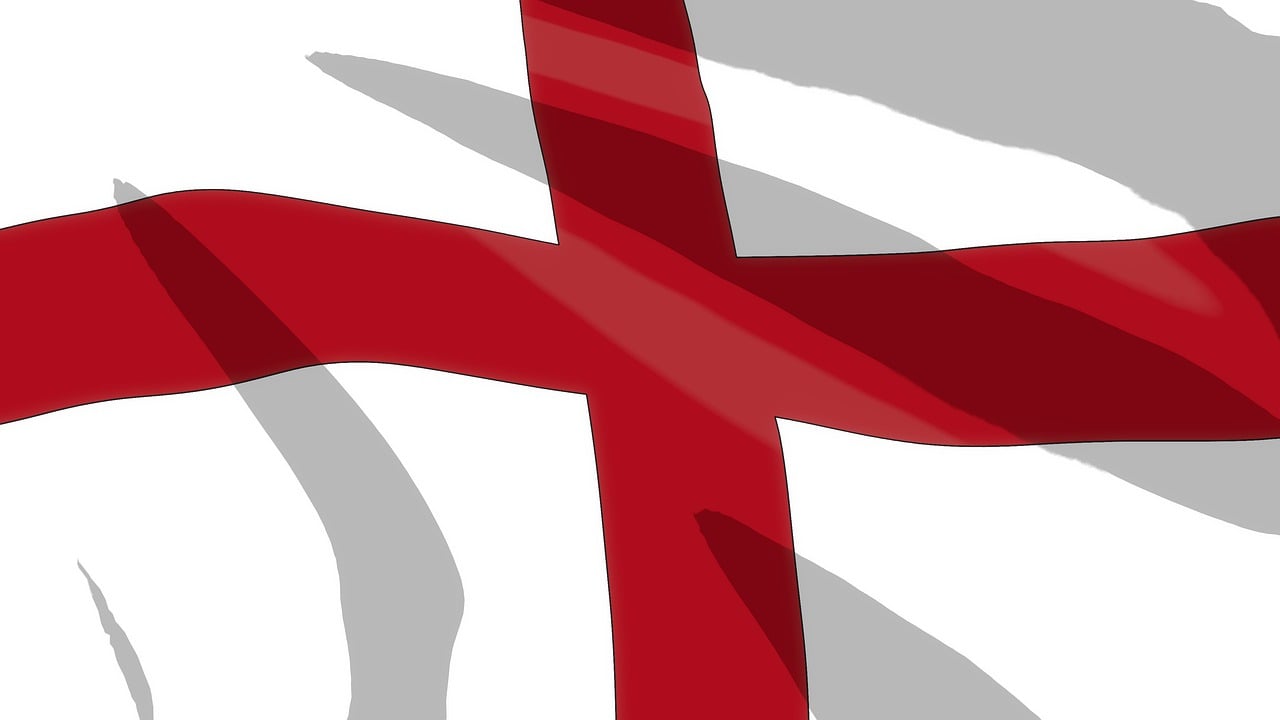
This new wave of British nationalism and the unprecedented surge in popular anti-immigration sentiment across the UK after led to other forms of activism taking place. One of the most notable acts in recent months was Operation Raise the Colours, when various protest groups began encouraging fellow patriots and nationalists to hang the flags of the UK and/or the flag of their respective British nation (England, Wales, Scotland and Northern Ireland) in as many public locations as possible, intending to promote a sense of nationalistic unity among the native peoples of the British Isles.