Homeless
Why War?
Any Date
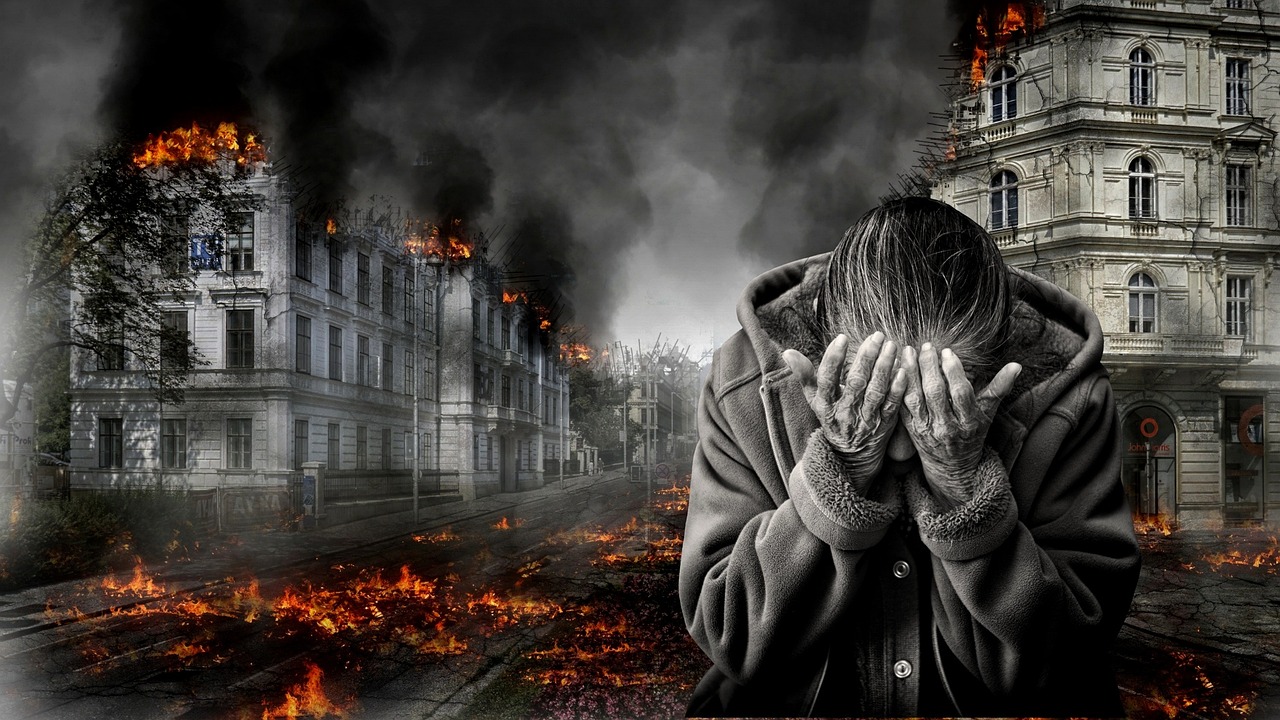
The sirens have been silent for almost three full days now. That silence, you’d think it would be a relief, but it’s not. It’s a held breath. The whole city is holding its breath. You can see it in the way people dart from doorway to doorway, in the empty windows that stare back at you like blind eyes.
I’ve been trying to write this for weeks, to make sense of the senseless. They call it a “conflict” on the news programs we can still sometimes catch on a crackling radio. A conflict. Such a clean, sterile word for the mess of it all. For the boom that rattles your teeth even when it’s miles away. For the smell – a mix of dust, cordite, and something sweet and sickly that I’m trying very hard not to identify.
Why is this happening?
Everyone has an answer, and no one has an answer that makes the waiting worth it. The politicians, before they fled or went into hiding, spoke of ancient grudges, of lines drawn on a map by men long dead.
They talk about resources – water, land, a passage to the sea. They use big words: sovereignty, ideology, historical imperative. They sound so certain.
Down here, in the basement we share with the Petrovs and the old widow, Mrs. Anya, the reasons are smaller and more terrifying. Ivan Petrov says it’s because they are afraid of us. The other side, he means.
He says they look at our little patch of earth and see a threat, a challenge to their own story. His wife, Elena, just shakes her head and says, “No, it’s because someone, somewhere, decided they could make money from the fear.”
I think they’re both right. It’s a fire lit by the powerful, using old grievances and old hatreds as kindling. They whisper lies until the whispers become shouts, and the shouts become bullets.
They convince ordinary people that other ordinary people are the enemy, the obstacle to a better life. And once that happens, the machinery of war takes over. It becomes a thing unto itself, a hungry beast that needs to be fed with more young men, more shells, more tears.
The Harms
How do I even begin to list them? It’s not just the dead, though their absence is a physical weight. It’s the absence of everything else.
The Harm to the Body: This is the most obvious. The wounded we see being carried to the hospital that’s still standing. The screams from the operating room that has no anaesthetic. The hunger that is a constant, dull cramp in your belly. The cold that seeps into your bones because the shelling took out the power grid again.
The Harm to the Mind: This is the quieter, more pervasive one. It’s the way my mother jumps at the sound of a car backfiring. It’s the haunted look in the eyes of a child, like little Yakov Petrov, who hasn’t spoken a word since his school was hit. It’s the numbness that settles over you, the inability to feel joy or even deep sorrow anymore. You just… exist. We are all slowly being hollowed out.
The Harm to the Soul: This is the worst. It’s the suspicion that creeps in when you look at your neighbour. Is he really one of us? Did his cousin fight for them? It’s the death of trust. It’s watching the world you knew, the little cafés, the park where children played, the library, be reduced to rubble. It’s the killing of beauty and the normal. War’s greatest victory is not over bodies, but over the human spirit.
Is there a winner or a loser?
People in the basement argue about this too, late at night when the fear is loudest. Some cling to the hope of “our side” winning. They dream of flags raised and territories reclaimed. They need to believe there is a point to all this suffering.
But sitting here, with the dust from the last explosion still settling on this journal, I know the truth. There are no winners. Only different degrees of losers.
Even if, in some distant future, one army stands on a hill and plants its flag, what have they won? A graveyard. A land poisoned with unexploded bombs and haunted by ghosts. A population broken and mistrustful.
The leaders who started this? They’ll be in safe rooms, or in foreign palaces. They will give speeches about victory or about noble sacrifice. They will never feel the cold like we feel it. They will never have to tell their child that there is no bread today. They will never have to bury a friend in a shallow garden grave.
The real losers are the Ivan Petrovs, who have lost his carpentry shop. The Elena Petrovs, who has lost her laughter. Little Yakov, who has lost his voice. My mother, who has lost her safe, peaceful old age. And me, I have lost the belief that the world, at its core, is a sane and just place.
We are all losers. Every single one of us. The only difference is the colour of the flag they wrap our bodies in.